
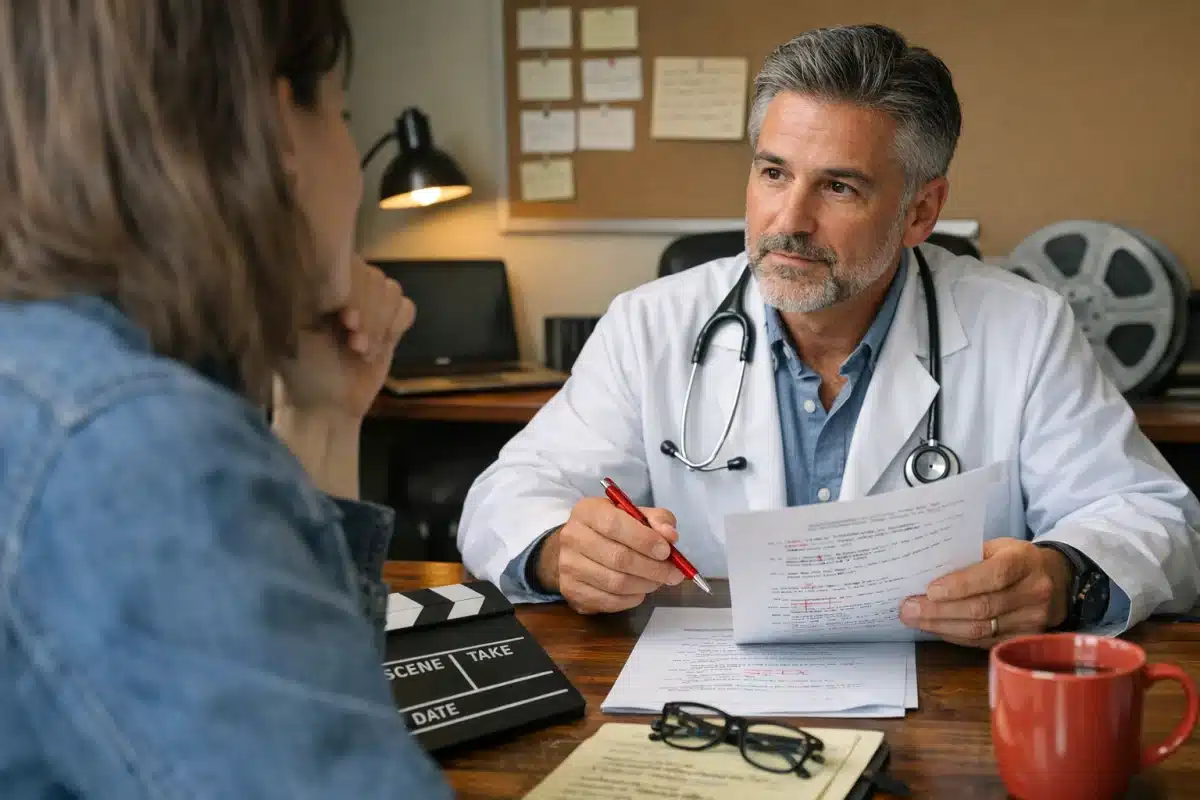
Most writers wait too long to call a script doctor.
They rewrite, revise, and polish, repeatedly, convinced the next draft will finally fix what isn’t working. Sometimes it does. More often, it doesn’t.
The problem isn’t effort. It’s perspective. And there comes a point when more rewriting only makes the underlying issues harder to see.
That’s when a script doctor stops being optional.
Pick your problem
First, rewriting. You’ve rewritten and rewritten, but the same problems keep returning. Writers often fix symptoms instead of causes. Your frustration level is topping out. If effort isn’t improving the script, the issue isn’t effort. It’s structure.
Second, you can’t see what’s wrong. Readers agree something is wrong but can’t explain what. They hear “It didn’t grab me.” Or, “Something feels off.” Or, “I lost interest in the middle.” Those are often structural issues.
Third, you’ve received contradictory feedback. This is a huge one. When different readers identify different issues, then consider that the screenplay has deeper structural issues.
Fourth, it works but it doesn’t. The story works in your head but not on the page. Every screenwriter knows this feeling. The movie in your imagination is fantastic. The screenplay isn’t delivering that experience. The story feels flat (even if you can’t explain why). It lacks emotional pull. The pacing is off. Scenes don’t have the impact they should have. This is where the pros diagnose what amateurs can’t name.

Fifth, you’re too close to the material. You’ve stopped being objective. After enough revisions, writers become blind to pacing problems, repetitive scenes, exposition, and weak dialogue. Objectivity usually becomes impossible after a certain point. You can’t identify the problems. You’re attached to scenes that don’t work, and don’t want to cut when you should.
Sixth, fear of rejection. You’re about to query, submit, produce, or enter competitions. Is it good enough? Is it keeping you awake at night?
Seventh, excess exposition. You’re telling rather than showing the story. Characters end up saying awkward lines like: “As you know, Senator, we’ve been at war with the Eastern Alliance for ten years.” Nobody talks like that. A script doctor shortens exposition, dramatizes it, or eliminates it. Screenplays are not novels. Other dialogue issues: It’s repetitive and/or lacks subtext.
Eighth, the stakes don’t escalate. The middle sags. Tension drops. Nothing builds. Nobody wants to finance a boring movie, nor will anyone knowingly go see a boring movie. This is a classic structural issue.
Ninth, you’re stuck. You can’t move forward. You’re engaged in endless tinkering. You’ve parked the script on the top shelf in the closet. Which hasn’t been dusted in five years. Psychologically, this is a big one to overcome.
And finally, tenth. Your mother says: “It’s very well written.” Invariably, that means it has problems.
If you recognize yourself in the situations above, don’t panic. Most screenplays can be improved. The real question is whether you’re still making meaningful progress on your own. If not, find a script doctor and make the call.
Pick your solution
Congratulations! You’ve completed your screenplay. You decided to have a professional screenwriter review your work. When we get calls like that, I often ask: “Is this your first screenplay?” If it is, there’s a good chance the script isn’t actually finished. Many first-time screenwriters stop revising when they’ve reached the end of the story rather than when they’ve solved the story’s problems.
A professional screenwriter will probably flag all sorts of problems with it, and I tell the client that this is common. This isn’t about selling additional services. It’s about giving the screenplay its best chance of success.
We have a welcome document that is sent to every writer we put under contract. In it, we tell the writer to be honest and tell the client what they think and to justify those thoughts. That way, the odds of client success improve. The client may be put off initially, but when they get the reasons, they realize it needs further work.
That’s why we only put helpful experts under contract.
When you don’t need a script doctor
No doctor visit is likely required for a simple scratch. An antibiotic ointment and a bandage is likely all you need. There’s no need to jump the gun. Early rough draft? Minor polish issues? Still exploring the story? A doctor visit would be premature.
Not every screenplay problem requires surgery. Sometimes a little more writing experience, another draft, or honest feedback from trusted readers is enough.
Wait until you’ve got a broken arm. When the draft is finished but it’s a mess, it’s time to go to the E.R., so to speak.

What a script doctor actually does
Script doctors are problem solvers. They’re story mechanics.
They’re not typists, proofreaders or line editors. What they do is not just rewriting, although that’s often part of the job. It’s a little more complicated.
Defective structure is one common problem they solve. Character arcs are another. Sometimes that means developing backstories, motivations, or conflicts that give the characters greater depth. Dialogue must be realistic and efficient. They will fix persistent dialogue problems. A script doctor will slice what isn’t needed to maintain interest. Does your story build to a climax? If your audience is yawning or snoring, you’ve got a problem.
Script doctors are the experienced screenwriters that studios, producers, or directors bring in when a script is already in pretty good shape but still needs some expert surgery to make it truly work. Think of them as specialized fixers who step in late in the game—often right before or even during pre-production—rather than starting from a blank page.
Individual authors also use them to be certain their screenplays are ready to be sold.
Super rush script doctoring
There are moments in film production when a doctor is summoned to the set for a conference. Super rush script adjustments may be required if an actor isn’t present for a scene. Or if the budget changed. Or the “dailies” (raw footage of the previous day’s shooting) demonstrate that something isn’t working.
To the extent possible, the script doctor will retain the original writer’s intent. Or at least that should be the goal. Not everyone is so accommodating. The goal is to solve the practical problems that could otherwise derail the project, without ego getting in the way.
One famous example occurred during production of 1972’s The Godfather. Director Francis Ford Coppola called screenwriter Robert Towne, flew him to New York, showed him hours of footage, and asked him to rewrite the critical transfer-of-power scene overnight. The result became one of the film’s most memorable moments.
Focus on targeted improvements

Does the story drag in the middle? They’ll sharpen dialogue to make it sound more natural or memorable, strengthen character arcs, or rework a weak ending so it lands with more impact. They will also take notes from the director, studio executives, or lead actors and weave those in without breaking the script’s core vision.
The script doctor will examine the screenplay for the stakes. What’s at risk? The one who comes out on top must have achieved or won something.
“Punching up” the material means adding sharper humor, more emotional depth, or heightened tension. For example, on The Devil Wears Prada, uncredited script doctors helped refine the witty, cutting dialogue that made the film so quotable. Or take Speed: the original script had potential, but doctors polished the action sequences and character banter to turn it into the high-octane hit we remember.
The secret service
The work performed by script doctors is usually uncredited, or only lightly acknowledged. It’s high-pressure, fast-turnaround work that demands real craft and discretion. You won’t see them on most award stages, but many successful films and shows quietly owe a lot to these behind-the-scenes pros. In Hollywood (and increasingly in TV and streaming), it’s simply how the system ensures a script is as strong as possible before cameras start rolling.
What happens when you bring it in
The general outline of work to be performed, the need for a non-disclosure agreement, delivery milestones, pricing and terms should be discussed in the first conversation.
Once those formalities are out of the way, your script doctor needs to know what you think the problems are, then he or she will read it and make notes. This is a diagnosis. The doctor will get back to you with those notes. Can the problems be solved with some stitches, or are you facing major surgery? The doctor will make structural recommendations and discuss the range of rewriting required.
The decision point
In the real world, how many finished or produced screenplays are perfect? Approximately zero. Unquestionably, yours also isn’t perfect. It’s whether you can still improve it on your own.
When you’ve got a broken arm, you go to a doctor. The same applies to a broken screenplay. If getting it into salable shape is the goal, that’s the process.
A script doctor isn’t there to tell you what you want to hear. They’re there to tell you honestly and clearly what the screenplay needs to hear.
Learn more about Ghostwriters Central and the professional writing services we offer.