




What do ghostwriters do?
By- Michael McKown
February 12, 2026
What a ghostwriter produces
I get calls from prospective clients, curious folks who think they probably need a ghostwriter for some project but are unsure whether a ghostwriter is the solution. The callers usually ask in a halting voice:
“What do you do?”
My usual reply is:
“We are professional writers who create content for clients, in their voice, with perfect discretion. We write everything from books to screenplays, to TV pilots, stage plays, to speeches, to wedding vows, to marketing materials, to blogs, and more. What sort of project do you need help with?”
Or more simply: A ghostwriter is a professional writer hired to create content that is officially, by contract, credited to another person.
At that point, things narrow down to specifics. The caller will describe what they need done and ask if I have anyone on my writer roster who can assist with the project. Invariably, I do have someone under contract who can handle the project. Normally, I have more than one qualified writer for any given project.
Speech types vary from wedding toasts, to wedding vows, to retirements, to eulogies, valedictorian, commencement, graduation, roasts, presentations, persuasive, sales, inspirational, motivational, and more.
Book manuscript types include memoirs, autobiographies, biographies, true crime, novels from romance to sci-fi, to self-help. Many authors have discovered the hard way that book projects often take far longer than expected.
We write screenplays and treatments for films. We write for televisions as well; the work includes scripts for pilots and series bibles.
The interview and discovery process
My company has many expert writers under contract, and I’ll recommend one whom I feel is qualified for the project. During the initial conversation, I’ll provide an overview of the process, often beginning with: “The writer needs to know what you know.” This consists of the client providing the writer with items created so far, including notes, journals, diaries or recordings that serve as source material.
Assuming that the client is comfortable with what ghostwriters cost, I’ll recommend a writer and direct the caller’s attention to either the gallery of writers on each page, or to the writing staff page under the about menu. It’s at this point I’ll ask if they want a non-disclosure agreement in place before the free writer consultation. If so, I’ll send it out for electronic signature.
Should the client desire to make their own selection, they ought to find out how to choose a ghostwriter. Once that’s out of the way, I contact the writer, ask if he or she wants to handle the project, then send over the relevant details. The writer will then reach out to schedule a lengthy consultation by phone, Zoom or FaceTime. That client-writer consultation is designed to arm the writer with knowledge.
Extracting story, voice and structure
Writing a book or screenplay, or even a speech, is all about telling a story. The ultimate goal is likely to entertain, inform or motivate. Earlier, I said “lengthy consultation” because that’s what it must be for the writer to understand the story, the story elements (or building blocks), and to absorb the client’s “voice.” In ghostwriting, that voice is supremely important.
There may be exceptions to this rule, but when a client is developing a story, they create it in their own voice, and their expectation is that the manuscript, screenplay or speech will be professionally written in that same voice. That client wants the final product to reflect their sensibilities, style of writing or speaking, and vision for the story and character arcs.
The writer’s challenge is to grasp the client’s manner of communication, emotional presentation and beliefs. And then to create using these elements as their mindset orientation. When the work is finished, it should be indistinguishable from what the client would have created, with the sole exception that the story is well structured and expertly told. It takes time to build that orientation.
Outlining and story architecture

Story architecture is the structural engineering of narrative. A well-constructed framework ensures that your story delivers emotional impact, maintains reader engagement, and reaches a satisfying conclusion, without unnecessary detours or abrupt endings.
The foundation for most contemporary fiction remains the three-act structure, a time-tested model that divides the narrative into Setup (Act 1), Confrontation (Act 2), and Resolution (Act 3).
Screenplays, although structured differently and tightly constrained by production considerations, follow much the same pattern.
Outlining translates this architecture into a practical roadmap. With fiction, begin by defining the protagonist’s external goal and internal need, then map major plot points backward from the desired ending. Identify turning points, reversals, and emotional beats.
It’s different with memoirs and biographies. With those, you’re faced with outlining a real person’s life. When the interviews are done, the writer will need to identify the elements important to the story. Adventures, mistakes, recovery, achievements, usually told in a linear fashion. Here, you will find examples of what to put in a memoir. Clarity of vision is important to a biographer. The writer needs to objectively decide what to keep and what is literally unimportant. If the client disagrees, the writer must be able to explain their reasoning.
Pacing governs how this structure feels to the reader. The writer must balance rapid sequences with reflective pauses to prevent fatigue. Early acts allow gradual immersion; later ones demand urgency. Chapter endings often function as subtle hooks, propelling momentum forward.
Writing and voice matching
The general principle in ghostwriting is clear: the client develops the narrative in their own distinctive voice, and they expect the final manuscript, screenplay, or speech to be delivered in that same voice. The goal is a polished work that reflects the client’s personal style, sensibilities, emotional tone, worldview, and creative vision for both story and character arcs.
The writer’s challenge is to actively engage in careful listening, analysis, and immersion until the client’s perspective becomes the writer’s guiding mindset. When the project is complete, the finished text should read as if the client had written it, only with quality structure, clarity, pacing, and craftsmanship.
Achieving this seamless alignment demands time, patience, and iterative refinement, but the result is a work that feels genuinely owned by the client while meeting professional standards.
Revisions and draft development
When the outline is completed, the writing begins. At my company, “staged approval” is the method we use. What constitutes a “stage” is negotiated between the writer and the client. The purpose of staged approval is to assure the writer is meeting the expectations of the client as the work unfolds. This process minimizes any need for extensive rewriting at the end.
Ghostwriting is normally a collaborative effort, but we have completed book, speech and script projects that did not include more than a set of instructions at the beginning. These were rush projects where collaborative time was not available.
The writer, upon completion of the first draft, will present it to the client for review for a beginning-to-end read through. Due to the stated approval process, any revisions at this point will be minimal. Then the final draft is completed. My company’s contract delineates “revision” from “rewrite.” It specifies the number of hours that will be devoted to free revisions, and that work beyond that limit will be charged.
Confidentiality and professional ethics
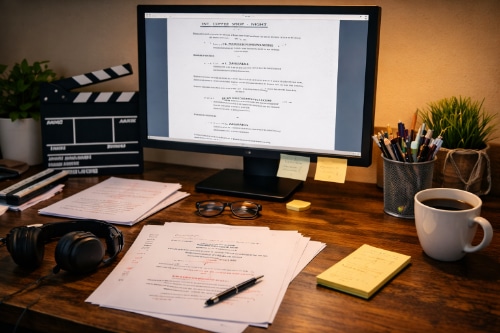
Ghostwriting, by definition, is a secret service. Non-disclosure agreements are the norm in this business. This is why professional ghostwriters do not receive glowing reviews from named clients, nor do they publicly take credit for works covered under an NDA. To do so would be a serious breach of ethics.
Those who hire a ghostwriter don’t want anyone to know they did so. The client may not be confident about their language or storytelling skills. They may lose their way when writing the story or speech. Every person has their own skill set. Carpenters are generally not skilled writers. And vice-versa. Or the client may simply not have the free time to write. And that is precisely why successful people hire ghostwriters. In any event, a ghostwriter’s default position must be: silence about clients and projects.
Ghostwriting is legal and ethical, provided there is no misrepresentation. The writer must not artificially enhance the client’s knowledge, skills, awards or achievements. In other words, don’t lie.
Types of ghostwriting projects
I have listed several categories of ghostwriting services below, but any professional writer will be surprised, at some point, with an assignment that falls outside of these parameters.
Book related
-
- Memoirs and autobiographies. Personal life stories or reflections from executives, celebrities, or everyday individuals.
- Nonfiction books (general). Business, self-help, health, history, or how-to guides by subject-matter experts.
- Self-help and personal development books. Motivational, wellness, or mindset works.
- Fiction (novels). Genres like romance, fantasy, thriller, sci-fi, or young adult, based on the client’s plot and ideas.
- Life stories of notable or family figures.
- Lead magnets, guides, or niche nonfiction/fiction.
- Book proposals. Pitches to agents or publishers, including outlines and sample chapters.
-
- Business and leadership books. Strategy, management, or executive thought-leadership titles.
- Keynote addresses, TED-style talks, corporate presentations, or political remarks.
- Blog posts and articles. Thought-leadership pieces for websites, LinkedIn, Forbes, or industry publications.
- Social media content. Posts, threads, captions, or ongoing feeds for influencers, brands, or executives.
- Website copy. Homepages, about pages, service descriptions, or landing pages.
- White papers. In-depth reports on industry topics, often for consulting firms or tech companies.
- Case studies. Detailed success stories or client examples for B2B marketing.
- Press releases. Announcements for companies, products, or events.
- Newsletter content. Email series, Substack-style publications, or internal updates.
-
- Video scripts. YouTube content, corporate videos, webinars, or promotional reels.
- Screenplays and treatments. For theatrical films, episodic streaming or broadcast television.
- Music lyrics or songs. Ghostwritten verses, choruses, or full tracks (common in pop, rap, or commercial music).
- Marketing materials. Slide presentation copy, brochures, product or service descriptions.
-
- Customized speeches and toasts, vows and officiant addresses.
- Personalized or niche projects. Such as advance obituaries, custom romance stories, or family histories.
- Academic or technical writing. Journal articles, medical/scientific pieces, user manuals, or reports.
Hiring a professional ghostwriter
The primary issue with hiring a writer isn’t finding a good one; it’s avoiding scams. We have an article on techniques a client can use to avoid them. A reminder: It’s okay for a writer to list their accomplishments and accolades, so long as the works are not covered by an NDA. We have videos on this topic in our ghostwriting video library.
Overseas-based agencies (often in Pakistan, India, or the Philippines) are often problematic. These frequently involve upfront payments for promised books/services that are never delivered (or are substandard/plagiarized), heavy upselling, fake testimonials, bait-and-switch tactics, and book-order scams. Writer Beware and the Authors Guild regularly document these, with examples.
Beyond scam concerns, a prospective client should talk with various professional ghostwriters, ascertain their experience, and knowledge of the client’s project type and topic. If the project is a sci-fi novel, worldbuilding will be required. If the project is a TV pilot or theatrical screenplay, experience in this unique craft is mandatory. Many clients don’t realize the difference between professional ghostwriters and freelance writers, especially when evaluating experience with long-form projects.
The ideal candidate will be a writer with whom the client feels a comfortable connection. Compatibility is essential if the project is to proceed without arguments, acrimony and hurt feelings. A quality writer wants to help their client succeed. He or she will structure and write the work to give that book or speech or screenplay the best-possible chance to achieve success.
If you are the prospective client, that’s exactly what you should expect. If the project can be thought of as a mountain, you and the writer are climbing it together. That writer is your guide and sherpa. Put your faith in the one who can get you to the summit.